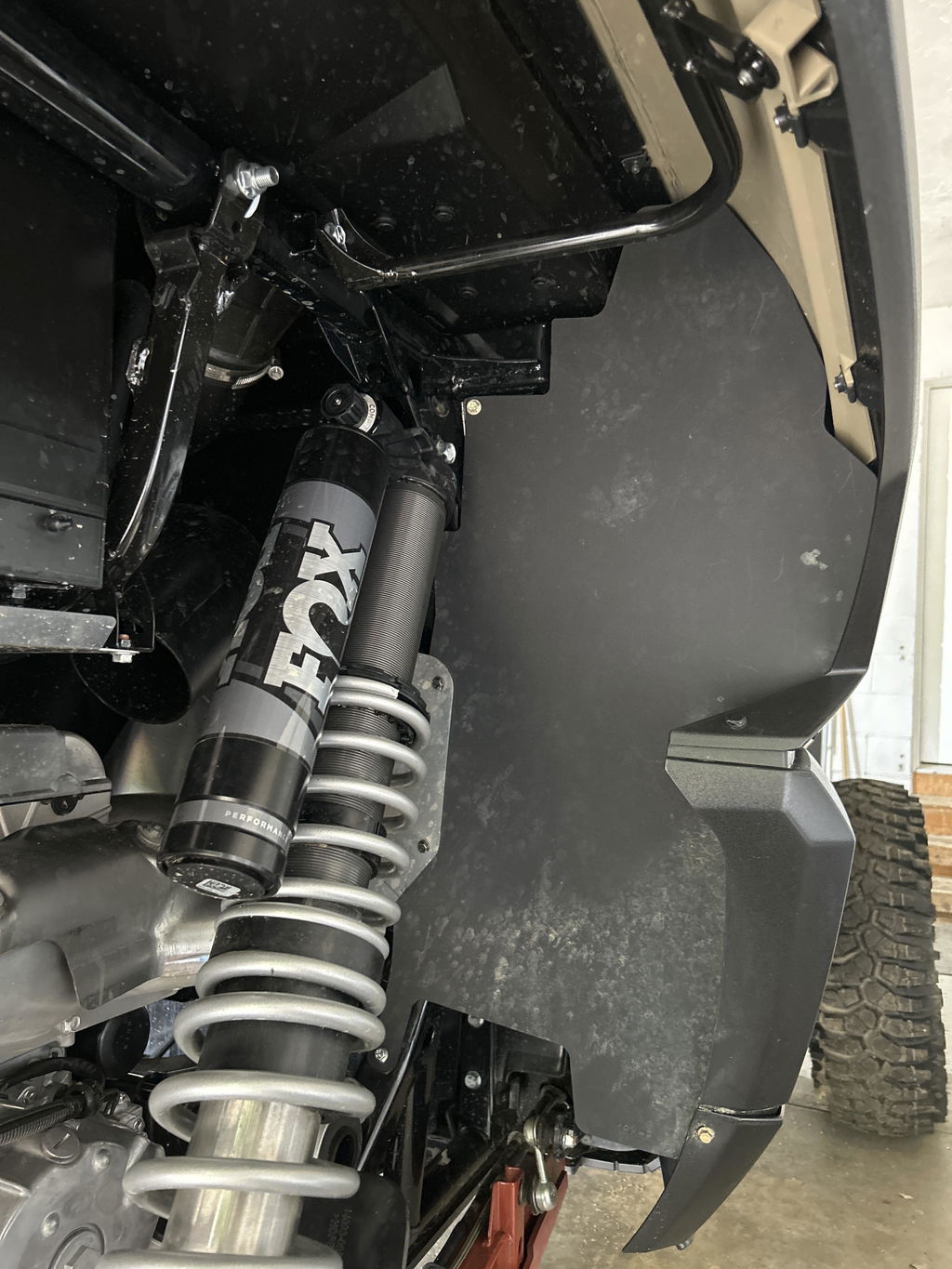
A UTV skid plate is a protective panel or system installed underneath the machine to help shield critical components from rocks, stumps, roots, and other trail debris. Depending on the make and model, skid plate coverage may help protect areas around the engine, transmission, differentials, fuel system, and other vulnerable underbody components.
Most UTVs come with some level of factory underbody protection, but the amount of coverage and material used can vary significantly by platform. Some riders may find the factory setup adequate for lighter use, while others riding rocky, rutted, or technical terrain may want additional protection.
If you have ever wondered What is a UTV skid plate, what it actually protects, or whether the protection under your machine is enough for the terrain you ride, this guide breaks it down.
A UTV skid plate does more than simply cover the underside of the machine. Its job is to take the contact that would otherwise reach exposed areas underneath the UTV. When the undercarriage meets rocks, roots, stumps, ledges, or other obstacles, the skid plate helps spread that contact across a broader area and provides a smoother surface for the machine to move across the terrain.
UTV skid plates are available in several materials, including steel, aluminum, and high-performance polymer. Coverage also varies by design, ranging from partial center protection to more comprehensive full skid plate systems that extend across larger areas of the undercarriage.
Fitment matters too. Some skid plates are designed specifically for a particular make, model, and year. Vehicle-specific systems are designed around the shape, mounting locations, and component layout of that particular machine.
To understand how different skid plate materials perform under real trail conditions, read Trail Armor's Super Tough Polymer vs. Aluminum vs. Steel: What Your UTV Skid Plate Is Actually Made Of.
Understanding what a skid plate protects makes it immediately clear why do UTVs have skid plates in the first place. Depending on the make and model, several important mechanical and structural components may sit close to the underside of the machine where they can be exposed to rocks, roots, stumps, ledges, and other trail hazards.
Depending on the machine, portions of the engine or oil pan may sit close to the underside. A hard impact in this area can damage the housing or create an oil leak, making underbody protection especially important on rocky or technical terrain.
The transmission is another critical component that may be positioned close to the underside of the chassis. Direct contact with rocks or ledges can damage the housing, while a skid plate helps provide a protective barrier between the transmission area and the terrain.
Front and rear differentials can be exposed to rocks, debris, and direct trail contact depending on the machine and factory protection provided. Skid plate coverage around these areas can help reduce the risk of damage during technical riding.
Some UTVs route fuel lines, brake lines, wiring, or other components along protected areas of the chassis. Damage to these systems can create serious mechanical or safety concerns, which is why it is important to understand what is exposed underneath your specific machine.
The location of the fuel tank and battery varies by platform, but areas around these components can be vulnerable to mud, water, and debris buildup. Additional underbody protection or mud shielding can help reduce direct exposure in certain applications.
Frame rails and other structural areas underneath the machine can make contact with rocks, ledges, and trail obstacles. A properly designed skid plate helps provide a barrier and can spread contact across a broader area rather than allowing an obstacle to strike one exposed point directly.
To understand what happens to each of these components when they take trail hits without protection, read Why Every UTV Needs Underbody Protection and What Happens When You Skip It.
Many modern UTVs come with some level of factory underbody protection, but the amount of coverage, material, and design can vary significantly by make, model, and trim level.
Factory protection may be adequate for some riding conditions, while riders who spend more time on rocky, rutted, or technical terrain may want additional coverage. The important thing is to inspect the underside of your specific machine and understand which areas are protected and which may still be exposed.
Factory skid plates can be made from plastic, steel, aluminum, or other materials depending on the platform. Coverage may focus on the center section of the undercarriage, while areas such as differentials, rocker panels, A-arms, or trailing arms may have limited or separate protection depending on the machine.
The factory UTV skid plate is a good place to start when evaluating underbody protection. Whether additional protection is needed depends on your machine, riding style, and the terrain you plan to ride.
Factory skid plate protection varies significantly by make, model, and trim level. Some machines come with fairly extensive underbody protection, while others provide more limited coverage. Aftermarket skid plate systems give riders the option to add broader coverage, use different materials, or protect areas that may remain exposed with the factory setup.
A vehicle-specific Trail Armor skid plate system is designed around the mounting points, underbody layout, and protection needs of the machine it fits. Trail Armor skid plate systems use 1/2" Super Tough Polymer with zero impact memory and a low-friction surface designed to help the machine move across rocks, roots, and other trail obstacles. Depending on the application, features may also include Integrated Slider Nerfs, strategically placed drain holes, and service access holes.
One important difference is how the material responds to impact. Metal skid plates can bend or dent after a hard hit, depending on the material, thickness, and impact. Trail Armor's Super Tough Polymer is designed to flex under impact and return to its original shape, helping the skid maintain its protective form after repeated trail contact.
Trail Armor skid plate systems are designed to provide broad underbody coverage for critical areas beneath the machine. On applications with Integrated Slider Nerfs, the design creates a smoother transition between the center skid and rocker area, helping reduce exposed edges and potential catch points as the machine moves across technical terrain.

The better question is often not whether a UTV should have underbody protection, but whether the protection already on the machine is appropriate for the terrain you ride most often. So who needs a skid plate? Riders who regularly encounter rough, rocky, muddy, or technical terrain are more likely to benefit from additional underbody protection.
Rock crawling places the undercarriage and suspension in frequent contact with rocks, ledges, and other hard obstacles. Riders who spend time on technical rock terrain may benefit from broader skid plate coverage along with A-arm and trailing arm protection.
Mud riders can benefit from skid plate systems designed with strategically placed drain holes to help water, mud, and debris drain from beneath the machine. Additional mud shields and fender protection may also help reduce debris buildup in hard-to-clean areas.
Desert and dune riding can expose the underside of the machine to sand, grit, rocks, and high-speed debris. A full skid plate system can provide added protection for critical underbody areas, while A-arm and trailing arm guards can help protect exposed suspension components.
Trail riders often encounter a mix of rocks, roots, sticks, ruts, washouts, and other unexpected obstacles. Additional underbody protection can be a worthwhile upgrade for riders who want broader coverage than the factory setup provides.
For riders who stay primarily on well-maintained roads or light trails, factory protection may be adequate depending on the machine. Inspect the underside of your UTV and consider the terrain you actually ride before deciding whether additional protection is necessary.
To understand exactly what each terrain type does to an unprotected UTV, read UTV Protection by Terrain: What Every Rider Needs for Rock Crawling, Mud, Desert, and Trail Riding.
Trail Armor offers vehicle-specific skid plate systems for a wide range of UTV makes and models. Trail Armor skid plate systems are built from 1/2" Super Tough Polymer, which provides zero impact memory, a low-friction surface, and rust-proof performance. Product design, coverage, and mounting methods vary by application.
Trail Armor Full Skid Plates are designed to provide broad underbody coverage for critical areas beneath the machine. Depending on the application, the system may include protection for the center skid area, rocker sections, differentials, and other vulnerable underbody components.
On applications with Integrated Slider Nerfs, the design creates a smoother transition between the center skid and rocker area, helping reduce exposed edges and potential catch points when moving across rocks, roots, ledges, and other trail obstacles.
Installation varies by application. Trail Armor uses factory mounting locations where available, while some kits may require self-drilling screws or other application-specific mounting methods.
Beyond Full Skid Plates, Trail Armor also offers additional protection products designed to help protect exposed suspension and body areas:
iMpact Front A-Arm Guards help protect the front A-arms and surrounding suspension components from rocks, roots, sticks, and other trail debris. Trail Armor provides three-sided Super Tough Polymer coverage when possible, depending on the design and available clearance of the specific machine.
iMpact Trailing Arm Guards help protect the rear trailing arms from direct contact with rocks, ledges, logs, stumps, and other trail obstacles. They also help shield the trailing arms from rocks and debris thrown rearward by the front tires.
Mud Flap Fender Extensions help reduce the amount of mud, water, dust, and trail debris thrown toward the cab and sides of the machine. Mud Shields help protect vulnerable underbed areas from direct exposure to mud and debris. Depending on the application, they may help shield areas around components such as the fuel tank, battery compartment, and other hard-to-clean spaces.
Browse the complete Trail Armor catalog by vehicle make and model.
Choosing the right skid plate comes down to five main considerations:
Step 1: Assess what you already have. Inspect the factory protection on your machine. Look at how much of the undercarriage is covered, which components remain exposed, whether the system includes drain holes, and whether routine service points are accessible. This gives you a clear starting point for deciding whether additional protection makes sense.
Step 2: Match protection to terrain. The terrain you ride should influence the type and amount of protection you choose. Rock crawlers may benefit from broader underbody coverage and Integrated Slider Nerfs. Mud riders may want drain holes, Mud Shields, and Fender Extensions to help manage mud and debris. Desert riders should consider protection for areas exposed to sand, rocks, and high-speed debris. Trail riders should evaluate the amount of coverage needed for the rocks, roots, ruts, and obstacles they encounter most often.
Step 3: Confirm model-specific fitment. Choose a skid plate designed for your exact make, model, and year whenever possible. Vehicle-specific systems are designed around the underbody layout, mounting locations, clearances, and protection needs of that particular machine. Installation methods vary by application, so always review the instructions for the specific kit before installation.
Step 4: Choose the right material. Skid plates are available in materials such as steel, aluminum, and high-performance polymer. Trail Armor's Super Tough Polymer provides zero impact memory and a low-friction surface designed to help the machine move across rocks, roots, ledges, and other trail obstacles. The polymer also will not rust.
Step 5: Confirm service access. Routine maintenance should be considered when choosing a skid plate system. Service access holes can make oil changes and other maintenance easier without requiring unnecessary removal of large skid sections. Exact service access varies by machine and application.
For a complete step-by-step guide to choosing the right skid plate for your specific machine, read How to Choose the Right Skid Plate for Your UTV: A Practical Guide for Every Rider.
 A factory UTV skid plate is a starting point, but whether it provides enough protection depends on the machine, the amount of factory coverage, and the terrain you ride.
For riders who regularly encounter rocks, roots, ledges, ruts, mud, or other technical terrain, an aftermarket skid plate system can provide broader underbody coverage and additional protection for vulnerable areas. Features such as Super Tough Polymer construction, Integrated Slider Nerfs, drain holes, and service access can also improve durability and usability depending on the application.
Trail Armor offers vehicle-specific protection systems for a wide range of UTV makes and models. To learn more about choosing the right protection for your machine and riding style, read How to Choose the Right Skid Plate for Your UTV.
If you are a new UTV owner getting started with protection decisions, read 10 Things Every New UTV Owner Should Do Before Their First Ride.
You can also browse the full Trail Armor catalog by vehicle make and model to find available protection for your machine.
UTV skid plates are commonly made from materials such as steel, aluminum, and high-performance polymer. Factory materials vary by make, model, and trim level. Trail Armor Full Skid Plate systems use 1/2" Super Tough Polymer with zero impact memory and a low-friction surface designed to help the machine move across rocks, roots, ledges, and other trail obstacles. The polymer itself will not rust.
Many modern UTVs come with some form of factory underbody protection, but the amount of coverage and material used varies by platform. Some machines provide more extensive protection than others, so riders should inspect the underside of their specific UTV to see which areas are protected and which remain exposed.
It depends on the machine and the terrain. Factory protection may be adequate for lighter riding conditions, while riders who regularly encounter rocks, roots, ledges, ruts, mud, or other technical terrain may benefit from additional aftermarket protection. The best approach is to evaluate the coverage already on your machine against the type of riding you actually do.
A skid plate protects areas underneath the machine, while a rock slider helps protect the rocker area along the sides of the UTV. On many applications, Trail Armor Integrated Slider Nerfs are incorporated into the skid plate system to create a smoother transition between the center skid and rocker area, helping reduce exposed edges and potential catch points.
There is no single thickness that is right for every skid plate material or every application. Material properties, design, coverage, mounting, and intended use all affect how a skid plate performs. Trail Armor Full Skid Plate systems use 1/2" Super Tough Polymer designed for demanding off-road use.
A properly installed skid plate should match the intended mounting locations, sit securely against the machine as designed, and not interfere with surrounding components. Drain holes and service access holes should align with their intended locations where provided.
During installation, dry-fit the panels before fully tightening the hardware and follow the instructions for your specific make, model, and year. After the first few rides or any hard impacts, inspect the skid plate and recheck the mounting hardware.
{"one"=>"Select 2 or 3 items to compare", "other"=>"{{ count }} of 3 items selected"}