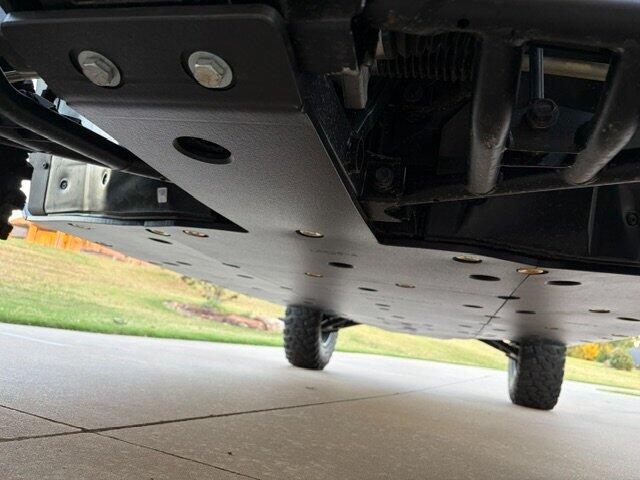
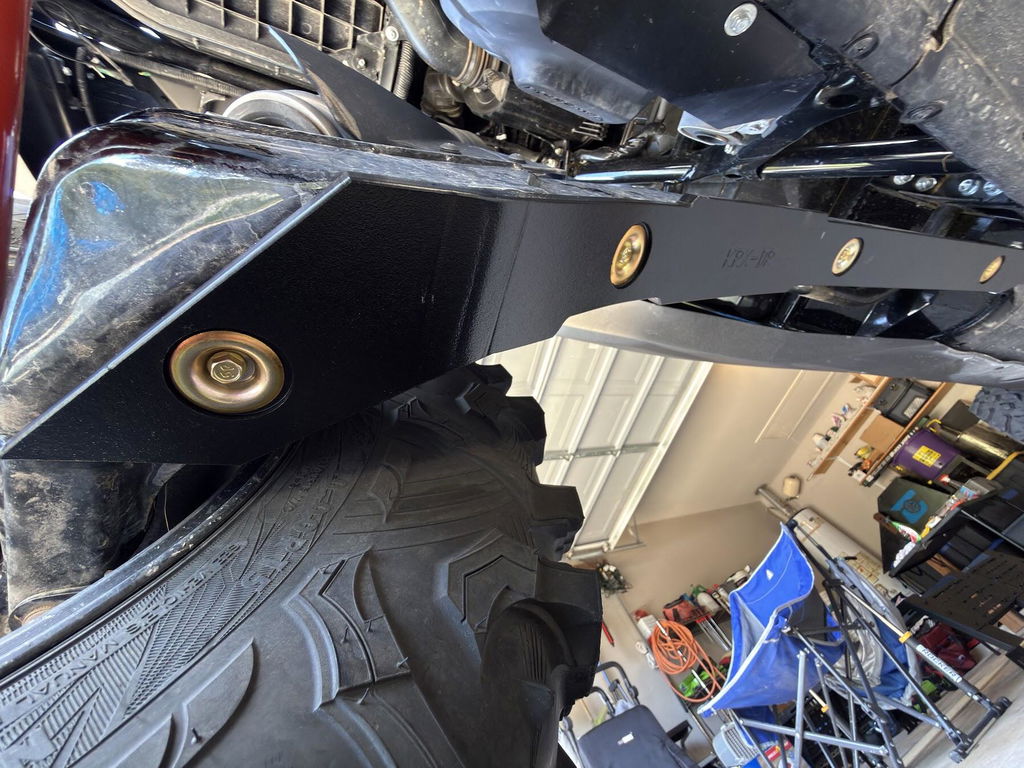
Search for UTV skid plates and you will find dozens of options, across multiple materials, brands, thicknesses, and coverage levels. Some claim to be full coverage. Some claim to be the strongest. Some are priced far apart from each other with very little explanation of why.
For a rider trying to make the right call for their machine, that is a lot of noise with very little signal.
This UTV skid plate guide cuts through it. There are five things every rider needs to evaluate before buying a skid plate: material, coverage, fitment, installation, and maintenance. Get these five right and you will make a decision you will not regret on the trail.
A UTV skid plate is not just a piece of material bolted to your frame. It is a mechanical decision that affects how your machine handles impacts, how much maintenance it requires, and whether it actually protects your drivetrain when things get real on the trail.
Before evaluating any product, every rider should ask these five questions:
The answers to these five questions determine whether a skid plate is actually worth the investment. Here is how to evaluate each one.
Material is the most important decision you will make. It determines how the plate responds to impact, how much it weighs, how much noise it makes, and how much ongoing maintenance it requires.
For a full technical breakdown of how these materials compare, read our guide on Super Tough Polymer vs. Aluminum vs. Steel: What Your UTV Skid Plate Is Actually Made Of. The summary for each material is below.
Steel is the original skid plate material and is still used by some OEM and aftermarket manufacturers due to low production cost. It is the heaviest option available, adds significant unsprung weight below your suspension, and has a high coefficient of friction against rock, causing drag and hang-ups on technical terrain. Most critically, steel deforms permanently on impact and stays bent, pressing into drivetrain components on every subsequent ride. It also rusts without regular treatment, adding ongoing maintenance requirements.
Aluminum is a genuine improvement over steel in terms of weight. It is lighter, which helps suspension performance, and it does not rust the way steel does. However, aluminum shares steel's fundamental flaw: permanent deformation. When it takes a hard hit, it dents and stays dented. Dented aluminum presses against the same drivetrain components it was supposed to protect. Aluminum also galls on rock, causing the vehicle to catch and drag rather than glide. It oxidizes over time, particularly in wet or salt environments, and resonates trail noise and vibration directly into the cabin.
Trail Armor's Super Tough Polymer is a proprietary 1/2" high-performance polymer formulation built specifically for the demands of serious off-road riding. It behaves fundamentally differently from metal under impact.
The most important property is zero impact memory. When it takes a hit from a rock, ledge, or debris, it absorbs the force and returns to its original shape. In most cases, here is no permanent deformation, no secondary contact with drivetrain components, and no damage building quietly underneath after the original impact.
It also has a low friction surface, allowing the vehicle to glide over obstacles on some machines rather than catching on them. It is 100% rust-proof, maintenance-free, and lightweight. Unlike metal plates, it dampens trail noise rather than resonating it, which is essential for riders in premium quiet-cab UTVs.
The industry benchmark for serious off-road use is 1/2" thick polymer. All Trail Armor skid plates are built to 1/2" thickness, which is thicker than many aluminum alternatives commonly found in the aftermarket.
Coverage is the second most important factor and the one most riders get wrong.
Most factory skid plates cover only a small portion of the underside, focusing on the most obviously critical areas. Side panels, differentials, A-arms, and trailing arms are almost always left exposed from the factory, even on machines marketed as off-road ready.
Many aftermarket options fall into the same trap, covering only the center chassis and leaving the front and rear differentials, rocker panels, and suspension components unprotected.
Before buying, ask these questions about any skid plate set:
Does it cover the front and rear differentials? Does it include integrated side skid plates or slider nerfs? Is there a gap between the skid plate and rock slider where an obstacle could grab and trap the machine? Does it cover the full length and breadth of the underside in one continuous, flush system?
Trail Armor skid plate sets provide comprehensive, flush, and continuous coverage for the full length and breadth of a vehicle's underside, including differentials. Unlike some other aftermarket skid manufacturers, the integrated design eliminates gaps and catch points and replaces factory components with relentless underbody armor.
To understand exactly what is at risk on an unprotected undercarriage, read Why Every UTV Needs Underbody Protection and What Happens When You Skip It.

A skid plate that is not designed specifically for your UTV model is a skid plate that will not do its job properly.
Universal fit skid plates are sold as one-size-fits-all solutions, but no two UTV platforms are identical. Mounting point positions, undercarriage geometry, differential locations, and frame rail spacing are all model-specific. A universal plate will leave coverage gaps in the areas that do not align with its generic design. It will often require drilling into the frame, which can compromise structural integrity and, in some cases, void the factory warranty.
Model-specific fitment eliminates all of these problems. A plate designed for your exact make, model, and year uses existing factory mounting points, fits flush against the undercarriage, and provides full coverage in every area it was engineered to protect.
Always verify make, model, and year before purchasing. Check that the fitment chart specifically lists your year range, not just the general model name.
Trail Armor offers precision-fit products across all major UTV and side-by-side platforms:
Every fitment is developed and tested specifically for that platform, not adapted from a template.
Installation quality is a direct indicator of product quality. A well-engineered skid plate system should minimize modifications to your frame, should include everything you need in the box, and should make routine maintenance easier, not harder.
Here is what to look for before you buy:
One final point on installation: check your mounting hardware after every 20 to 30 hours of riding. Vibration and trail impacts work hardware loose over time. A loose skid plate does not protect your machine the same way a secure one does.
Maintenance requirements vary dramatically by material and are a real factor in the long-term value of any skid plate investment. This is where skid plate maintenance tips matter most.
For all materials, inspect mounting bolts every 20 to 30 hours of riding. Vibration is the most consistent cause of hardware loosening on any skid plate system.
Material, coverage, fitment, installation, and maintenance all converge at the same final question: which skid plate is right for the way you actually ride?
To learn more about Trail Armor, the brand behind every product in this guide, read Who Is Trail Armor? The Story Behind the Brand Built for Serious Riders.

Five questions. Five answers. Material, coverage, fitment, installation, and maintenance. That is the complete framework for choosing a UTV skid plate that will actually perform when you need it to.
Trail Armor builds every product in the Trail Armor skid plates lineup to answer all five correctly: 1/2" Super Tough Polymer, comprehensive full-length coverage, precision model-specific fitment, no-drill installation with photo-documented instructions, pre-drilled service access, and zero ongoing maintenance requirements.
Explore the full Trail Armor catalog by vehicle make and model and find the Trail Armor skid plate built for your machine, your terrain, and the way you ride.
The industry benchmark for serious off-road use is 1/2" thickness. Trail Armor skid plates are all built to 1/2", which is thicker than many aluminum alternatives and other polymer options commonly found in the aftermarket. Thinner plates provide less impact absorption and deform more easily under hard hits.
A center-only plate leaves the front and rear differentials, side panels, and suspension arms unprotected. For any riding beyond mild gravel trails, a full skid plate set that covers the complete underside is the correct choice. Trail Armor designs every skid plate set for comprehensive, flush, continuous coverage with no gaps.
Where possible, Trail Armor designs its products to use existing factory mounting points with no drilling required. How often should I check my skid plate bolts?
Check mounting hardware every 20 to 30 hours of riding. Trail vibration and impacts work hardware loose over time. A loose plate does not provide full protection.
A skid plate protects the underside of the machine, covering the engine, transmission, differentials, and fuel system. A rock slider protects the rocker panels on the sides of the machine. Trail Armor's integrated design combines both into a single continuous system, eliminating the catch point that exists between two separate components.
Always verify your exact make, model, and year against the product fitment chart before purchasing. Trail Armor lists specific year ranges and model editions for every product. If you are unsure, contact Trail Armor directly before ordering.
{"one"=>"Select 2 or 3 items to compare", "other"=>"{{ count }} of 3 items selected"}