You are halfway through a trail you have ridden a dozen times. Nothing technical, nothing extreme. Then your machine drops into a shallow rock shelf you did not see coming, and something underneath takes a hit. You keep riding. The machine feels fine. But three rides later, something is not right.
That is how underbody damage works on a UTV. It does not always announce itself. It builds quietly, one impact at a time, until the repair bill tells the whole story.
Every UTV needs underbody protection. Not just machines built for rock crawling. Not just high-horsepower desert rigs. Every side-by-side, on every trail type, is one bad hit away from damage that could have been completely prevented. Whether you know the brand as Trail Armor, Trail Armour, or TrailArmor, the mission is the same: keep your machine protected before the trail makes that decision for you. This guide breaks down what is actually at risk underneath your machine, what the trail does to an unprotected undercarriage, and what full UTV underbody protection actually covers.
Before you can understand why underbody protection matters, you need to know what is actually sitting between your machine and the ground.
The undercarriage of a UTV is not just a frame and a floor. It is home to some of the most mechanically critical and expensive components on the entire vehicle. Here is what is down there:
The transmission manages power transfer between the engine and the wheels. On most UTVs it sits low in the chassis with very little clearance between the housing and the ground. A single direct rock strike can crack the case.
The oil pan holds the engine lubricant that keeps every moving part inside the engine alive. It is one of the most exposed components on the underside. A puncture does not just create a leak; it can result in engine seizure if the oil loss goes unnoticed on the trail.
The differentials allow your wheels to rotate at different speeds through corners and over obstacles. Both sit in exposed positions at the front and rear of the undercarriage, directly in the path of rocks and debris.
The constant velocity boots protect the joints that transfer power to your front wheels. They are made from rubber and sit at the ends of your A-arms. A single puncture from a sharp rock or stick introduces grit and debris directly into the joint, destroying it from the inside.
These run along the undercarriage and are among the most safety-critical components on the vehicle. A damaged fuel line is a fire hazard. A compromised brake line is a complete loss of braking. Neither announces itself before it becomes a serious problem.
Both sit in the middle and rear of the undercarriage. Mud and debris pack around them silently on every ride, trapping moisture and causing corrosion and structural damage over time.
Every one of these components sits close to the ground. Every one of them is vulnerable. And every one of them is expensive to repair.
This is the question most new UTV owners never think to ask until it is too late.
The short answer is: not enough.
Factory skid plates are designed with production cost in mind, not trail performance. Most OEM plates are thin, cover only a small portion of the underside, and leave critical areas completely exposed. The transmission, engine, and differentials may have minimal protection, but the side panels, A-arms, trailing arms, and the full length of the undercarriage are almost always unprotected straight from the factory.
Even UTVs marketed as off-road ready come with significant protection gaps. Manufacturers build machines to a price point. Serious underbody protection is an aftermarket consideration, not a factory priority.
The riders who find this out the hard way are not always the ones pushing extreme terrain. They are often casual trail riders who hit something unexpected on a trail they have ridden before.
Every terrain type presents a different threat to an unprotected UTV undercarriage. Here is what is actually happening underneath your machine on each type of trail:
Rocks are the most direct and immediate threat. A single sharp rock at the wrong angle can puncture the oil pan, crack the transmission case, or strike the differential housing. On technical terrain, even slow-speed contact carries significant impact force.
Fallen timber on the trail creates hang-up points. A protected machine glides over them. An unprotected machine can catch the transmission or differentials on a stump edge, causing a hard stop and direct impact to the most vulnerable components underneath.
Mud looks harmless. It is not. Packed mud and trail debris accumulate around the fuel tank, battery housing, and frame joints on every ride. That trapped moisture creates the conditions for corrosion, and the debris itself causes structural damage over time that is invisible until something fails.
Desert and dune riders often underestimate sand as an abrasive. Airborne grit and fine sand act as a continuous abrasive on every exposed metal component underneath the machine. Over months of riding, this wears through surfaces that direct impacts might never touch.
River crossings and deep water trail sections expose brake lines and fuel lines to sustained moisture. Rust and corrosion develop in the joints and fittings, quietly compromising the system long after the water crossing is behind you.
The approach and departure angle of a UTV changes dramatically on hills. Components that are normally sheltered by the frame become exposed on steep climbs and drops. Without full-length underbody coverage, the undercarriage makes contact with terrain it would never touch on flat ground.

This is the part most riders never consider: what happens after the hit. UTV undercarriage damage is rarely a single dramatic event. It is a process that starts with one impact and builds silently from there.
When a metal skid plate takes a hard impact and deforms, it does not just fail in that moment. It fails continuously. A bent plate that has been pushed inches toward the transmission case does not spring back. It stays there, pressing against the housing with every vibration, every trail flex, every mile. The secondary damage accumulates quietly until the transmission eventually fails, and the cause is traced back to a trail hit the rider barely remembered.
A CV boot that takes a sharp nick from a rock does not stop the machine. It keeps going. But the puncture allows grit and trail debris into the joint on every subsequent ride. The joint wears from the inside until the drivetrain starts to go.
A small fuel line abrasion from repeated contact with trail debris does not cause an immediate leak. It causes a slow weep that goes unnoticed until the machine is losing fuel or, in a worst-case scenario, creating a fire risk on the trail.
Underbody damage is cumulative. The hit that causes the eventual repair is rarely the last one. It is often the first one that was never addressed.
Trail Armor's Super Tough Polymer eliminates this chain of events at the source. Zero impact memory means the plate absorbs the hit and returns to its original shape. There is no deformation, no secondary contact, and no damage building quietly underneath. To learn more about Trail Armor and the engineering behind every product, read Who Is Trail Armor? The Story Behind the Brand Built for Serious Riders.
This is one of the most common misconceptions in the UTV world. The answer is no.
A smooth-looking trail is not a safe trail. Roots just below the surface, embedded rocks, and debris from seasonal washouts are invisible until you are on top of them. Casual riders often have less experience reading trail hazards, making unexpected impacts more likely, not less.
The damage from mud and water is not dramatic. It is quiet and cumulative. Debris packs around the fuel tank and battery on every ride. Moisture sits in frame joints and fittings. By the time the damage shows up, it has been building for seasons.
Working machines take the most consistent punishment. Daily use across fields, pastures, and rough access roads creates cumulative undercarriage wear that adds up faster than recreational riding. A utility UTV without underbody protection is a maintenance problem waiting to happen.
Sand abrades. Every mile of desert riding is a mile of fine grit working against every exposed component underneath the machine. The damage is not from a single hit. It is from thousands of them.
A machine with an enclosed cab and a luxury interior is still sitting on the same vulnerable undercarriage as any other UTV. Undercarriage damage affects the resale value of a machine that cost a significant investment. Protecting that investment is not optional.
The terrain changes. The risk does not.
Trail Armor's full UTV underbody protection suite addresses every vulnerability covered in this blog. Every product is built from the same proprietary 1/2" Super Tough Polymer, and every product is designed to work together as a complete system. To understand exactly how Super Tough Polymer outperforms aluminum and steel on the trail, read Super Tough Polymer vs. Aluminum vs. Steel: What Your UTV Skid Plate Is Actually Made Of.
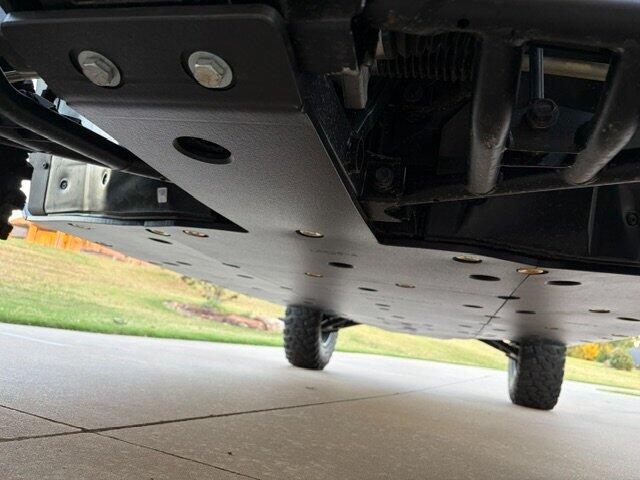
Trail Armor Skid Plates and every Trail Armor Skid Plate set provide comprehensive, flush, and continuous coverage for the full length and breadth of a vehicle's underside, including differentials. The Trail Armor KRX lineup in particular addresses the Kawasaki platform's well-known vulnerability, where the factory plate leaves the transmission case dangerously exposed. If you have been searching for a Kawasaki KRX 1000 Skid Plate, a KRX 1000 Skid Plate, or a KRX Skid Plate, Trail Armor's integrated design is built specifically for that platform. Unlike some other aftermarket skid manufacturers, the integrated design eliminates gaps and catch points and replaces factory components with relentless underbody armor. There is no gap between the skid plate and rock slider where an obstacle can grab and trap your machine.
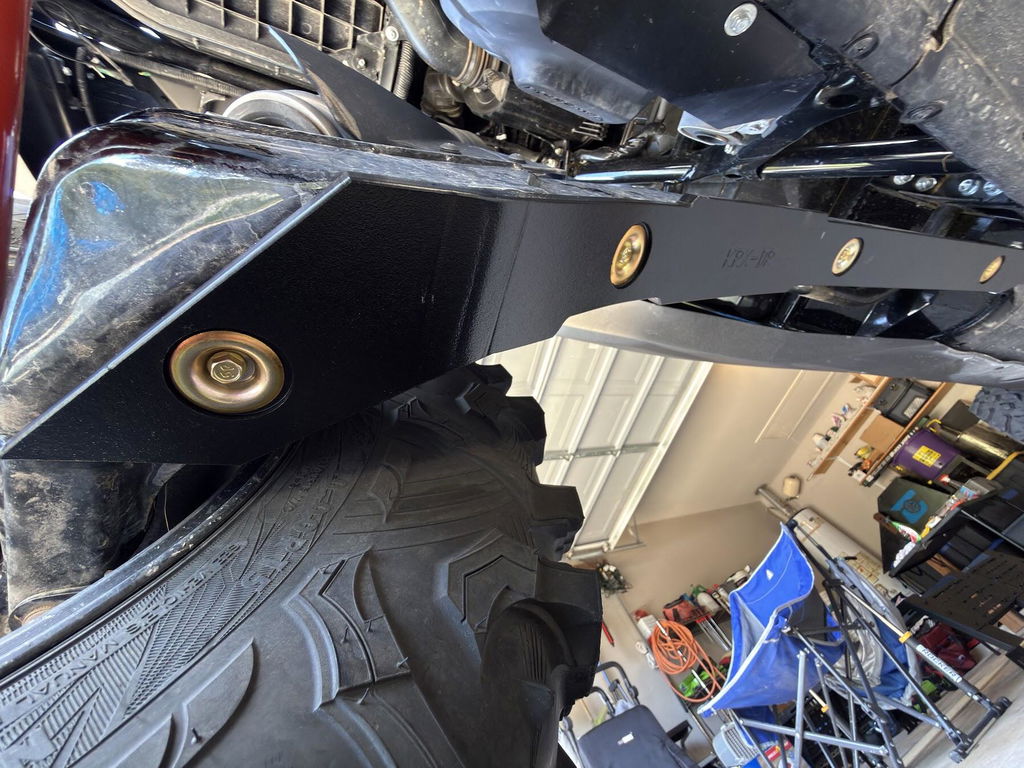
Your A-arms and CV boots are among the most frequently damaged components on any Trail Armor UTV build. Trail Armor A-Arm Guards are one of the most requested products in the lineup for exactly this reason. In most cases, Trail Armor's iMpact A-Arm Guards provide three-sided coverage protecting the front, rear, and bottom of the arm, keeping the A-arms and steering linkages safe from direct rock strikes. In most cases, these install using existing factory mounting points with no drilling required.
The rear suspension takes sustained hits from rocks and debris thrown up by the front tires on every trail. Trail Armor's Trailing Arm Guards are precision-formed to follow factory contours, built from the same Super Tough Polymer, absorbing those hits before they reach the suspension components.
Trail Armor's mud shields and fender extensions, made from the same Super Tough Polymer, keep debris out of the cab and engine bay, protecting the areas around your fuel tank and battery from the long-term structural damage that accumulated mud and debris causes over time.
Every kit ships with photo-documented installation instructions. Pre-drilled service access holes mean oil changes and routine maintenance do not require removing the armor. Recessed hardware keeps all bolt heads protected from rock strikes.

Underbody damage does not ask for permission. It does not wait for a technical trail or an extreme ride. It happens on the trails you have ridden before, on the terrain you thought you knew, from the hit you barely felt.
The riders who protect their machines before they need it are the ones who keep riding. The ones who wait find out the hard way that the trail does not care how careful you were.
Trail Armor Skid Plates and the full Trail Armor protection suite are built for every rider, every terrain, and every machine. Explore the full Trail Armor catalog by vehicle make and model and find the UTV underbody protection your machine was built to have.
Yes. Easy trails still have embedded rocks, roots, and debris that are invisible until you are on top of them. Casual riders are also less likely to anticipate trail hazards, making unexpected impacts more common. UTV Skid Plates are protection against what you do not see, not just what you do.
A full UTV underbody protection system covers the transmission case, engine oil pan, front and rear differentials, CV boots, steering linkages, and the fuel tank and battery area. Trail Armor's product suite is designed to cover all of these in a single integrated system.
Yes. A single rock strike at the wrong angle can crack a transmission case, puncture an oil pan, or damage a CV boot. Even impacts that feel minor can cause deformation that leads to secondary damage on every subsequent ride.
Yes. Trail Armor's Super Tough Polymer is 100% rust-proof and maintenance-free, which means it performs equally well in rocky, muddy, wet, sandy, and mixed terrain conditions. Its zero impact memory means it absorbs hits on any terrain type and returns to its original shape.
Check the coverage area of your factory skid plate. If it does not cover the full length of the underside, including the side panels and differentials, it is not enough for serious trail use. Most factory plates leave significant gaps that Side by Side Underbody Protection from Trail Armor addresses directly.
Trail Armor offers precision-fit products for Kawasaki KRX 1000 and KRX 4 1000, CF Moto UForce, Polaris RZR, Ranger, General and Xpedition (including the Polaris Xpedition Skid Plate fitment), Yamaha YXZ and RMAX (including the YXZ Skid Plate fitment), Honda Talon and Pioneer, and Can-Am Maverick, Defender and Commander. Every fitment is developed specifically for that platform, not adapted from a one-size-fits-all template.
{"one"=>"Select 2 or 3 items to compare", "other"=>"{{ count }} of 3 items selected"}