

You put a lot of love, and let's be honest, a lot of money, into your machine. You dialed in the suspension, threw on the perfect set of tires, and grabbed the right gear. But what is actually watching your back when you drop off a nasty rock ledge or catch it on a hidden stump?
The skid plate under your rig is not just a random piece of material bolted to the frame. It is the only thing standing between a brutal trail and your engine, transmission, and fuel lines. Here is the kicker: the material you choose determines whether it actually saves your machine, or quietly starts ruining it the second you take a hard hit.
When it comes to UTV skid plates, there are three materials you will encounter: steel, aluminum, and Trail Armor's Super Tough Polymer. This guide breaks down exactly how each one performs in real-world off-road conditions, so you can pick the right armor before you actually need it.
A common misconception among off-roaders is that any underbody armor is sufficient. The reality is that the wrong skid plate material can actively compromise your vehicle's mechanical integrity.
The primary flaw of traditional metal armor is its tendency to deform permanently. Unlike advanced polymers, when a metal plate sustains a severe impact from a rock obstacle, it retains that shape. The resulting dent or crease often reduces the clearance between the skid plate and critical powertrain components, including the transmission housing, engine mounts, and fuel lines. A single impact triggers ongoing, secondary damage as the vehicle vibrates and flexes over the terrain.
Choosing the right material for your aftermarket UTV skid plates is far from an aesthetic choice. It is a vital mechanical decision.
Prior to the introduction of advanced polymers, steel was the baseline standard for underbody armor. While still utilized by some OEM and aftermarket manufacturers due to low production costs and ease of manufacturing, steel skid plates fail to meet the demands of modern off-roading. Full steel skid plate sets are outdated, heavy, and often have no real upside in comparison to modern polymer protection.
The primary drawbacks of steel are mechanical and environmental:
When riders start researching Super Tough Polymer vs aluminum skid plates, aluminum is often the first upgrade they consider from factory steel. It is a genuine upgrade over steel, offering significant weight savings that keep your suspension performing at its best. But it shares steel's fatal flaw: permanent deformation.
When aluminum takes a hard hit, it dents instead of flexing back into shape. A bent plate can end up pressed directly against the vital drivetrain components it was meant to protect, causing ongoing secondary damage long after the initial impact. Aluminum also galls on rock, causing the vehicle to stick and drag rather than glide smoothly over obstacles, a major drawback on technical trails where momentum is everything. Aluminum is not entirely maintenance-free either. While it will not rust like steel, it will scratch, degrade, and oxidize over time, especially in wet or salty environments.
Much like steel, aluminum is highly resonant. Trail impacts transmit directly through the metal plate and share themselves with every passenger in the cab. This resonance creates an annoying acoustic and physical effect, compromising the premium ride comfort expected from modern enclosed-cab machines.

This is where Trail Armor changes the game. Trail Armor skid plates are built from a proprietary 1/2" Super Tough Polymer. Do not mistake this for cheap, flimsy plastic. It is a high-performance polymer formulation engineered specifically to take an absolute beating on the trail, and it behaves completely differently than metal when things get rough.
The best thing about Trail Armor's Super Tough Polymer is that it has zero impact memory. When it takes a hit from a jagged rock or a high ledge, it absorbs the blow and pops right back into its original shape. No permanent deformation, no bent metal creeping up into your engine mounts, and no hidden damage grinding away underneath. Your transmission, engine mounts, and fuel lines stay protected, ride after ride.
Ever feel your rig grab a rock and just stop? Trail Armor's Super Tough Polymer has a low friction surface. It acts as a self-lubricating glide on some machines, allowing your UTV to move over obstacles instead of catching and hanging up. On technical trails, that is the difference between maintaining momentum and getting stuck.
Trail Armor's Super Tough Polymer is also incredibly lightweight. It will not bog down your chassis or mess with your dialed-in suspension performance. It is 100% immune to rust and corrosion, and whether you are riding through freezing winter trails or baking desert heat, it requires zero maintenance.
Metal skid plates turn your underbody into a sounding board. Aluminum and steel are highly resonant, meaning every rock ping and trail thud amplifies until your enclosed cab sounds like a tin can. Trail Armor's Super Tough Polymer dampens that noise and vibration directly at the frame. If you bought a premium quiet-cab UTV, you paid for a refined ride experience. Do not let a harsh, noisy metal plate take that away.
| Property | Super Tough Polymer (Trail Armor) |
Aluminum | Steel |
|---|---|---|---|
| Impact Memory | None; returns to shape | Permanent denting | Permanent bending |
| Corrosion | 100% rust-proof | Moderate oxidation | High rust risk |
| Friction / Glide | Self-lubricating glide | Tends to catch | High drag |
| Weight | Lightweight | Moderate | Heaviest |
| Noise | Silent dampening | Resonates | Loud resonating |
| Maintenance | None required | Occasional treatment | Regular rust-proofing |
The ultimate upgrade. It absorbs impacts and snaps back to shape, glides over rocks, keeps your machine lightweight, and dampens trail noise. Zero maintenance, zero rust.
A partial upgrade with real flaws. It saves weight compared to steel, but it dents permanently under hard hits, catches on rocks, oxidizes in wet environments, and creates an annoying resonance in the cab.
Outdated and old school. It is the heaviest option available, drags heavily across rocks, and rusts quickly in mud. Most critically, it bends permanently on impact and stays pressed against your vital drivetrain components.
Trail Armor's product line is made from the same proprietary 1/2" Super Tough Polymer. Here is how this locks down your machine, bumper to bumper:
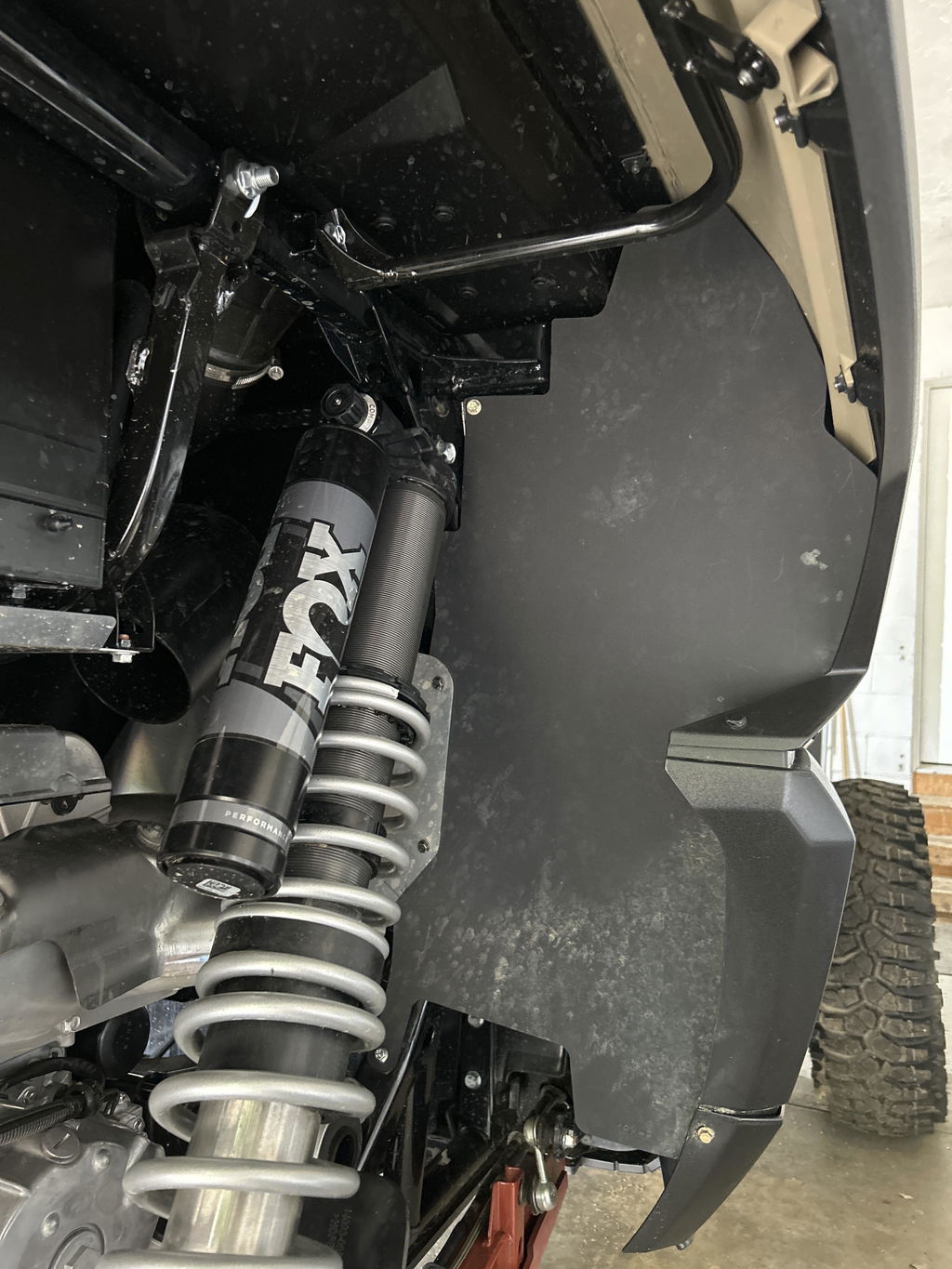
Trail Armor skid plate sets provide comprehensive, flush, and continuous coverage for the full length and breadth of a vehicle's underside, including differentials. Unlike some other aftermarket skid manufacturers, the integrated design eliminates gaps and catch points and replaces factory components with relentless underbody armor.
Your suspension components take some of the most brutal direct hits on the trail. In most cases, Trail Armor's iMpact A-Arm Guards provide three-sided shielding for the front, rear, and bottom of your arms, keeping the a-arms and steering linkages safe from jagged rocks. In most cases, these install using existing factory mounting points with no drilling required. Trailing Arm Guards cover your rear suspension in that same Super Tough Polymer, formed to follow factory contours to absorb hits from rocks and debris kicked up by the tires.
Mud is not just messy. Packed debris around your fuel tank and battery can cause serious structural damage over time. Trail Armor's mud shields and fender extensions, made from the same Super Tough Polymer, keep the muck out of your cab and engine bay, protecting the areas around your fuel tank and battery from long-term damage.

You might think aluminum or steel is fine for mild, low-impact trails, but metal armor turns every flying pebble into a loud cabin ping. Over time, that constant contact leads to corrosion and increased maintenance. Trail Armor's Super Tough Polymer eliminates the noise and the upkeep instantly.
Trail Armor's Super Tough Polymer is the only choice here. When you are crawling through tight boulder fields, zero impact memory and a slick, rock-gliding surface are completely non-negotiable. One bad hit on a metal plate can dent your armor into your transmission and end your day.
Go Super Tough Polymer or go home. Steel rusts, aluminum oxidizes, and both degrade rapidly when submerged in the muck of a wet environment. Trail Armor's Super Tough Polymer is completely unaffected by moisture, standing water, or abrasive silt.
If you paid for a quiet, luxury cab, do not ruin it with resonant metal plates. Trail Armor's built-in noise dampening is essential for preserving the refined cabin environment you bought the machine for.
If your side-by-side is a daily workhorse, you need armor that is completely maintenance-free. Trail Armor's Super Tough Polymer takes a beating day after day, year after year, without ever needing rust-proofing or repair.
When conditions get real, nothing compares to Trail Armor's Super Tough Polymer. You get zero impact memory, a slick low-friction glide, total immunity to corrosion, and the kind of noise dampening that keeps your ride genuinely enjoyable on the roughest trails.
Backed by over two decades of real-world engineering out of Corinth, Mississippi, Trail Armor skid plates are built to let you focus on facing the terrain instead of worrying about the limits of your machine. Every trail has a price. Do not let your drivetrain be the one paying it.
Explore the full Trail Armor catalog by vehicle make and model and find the Trail Armor skid plates built to take every hit so your machine does not have to.
No. It is a proprietary high-performance polymer formulation that rebounds instantly instead of cracking or denting.
A solid 1/2" thickness, thicker than many thin aftermarket aluminum or other polymer options.
Yes. The low friction glide and zero impact memory keep you moving over obstacles that would trap a metal-plated rig.
No. It is rated for a wide thermal range, from freezing winter trails to summer desert heat.
Wherever possible, Trail Armor designs its products to use existing factory mounting points with no drilling required.
No. Built-in service access holes let you perform routine maintenance with the armor completely attached.
It adds unnecessary weight, bends permanently into vital components, rusts easily, and requires constant upkeep. Trail Armor's Super Tough Polymer is the superior choice.
{"one"=>"Select 2 or 3 items to compare", "other"=>"{{ count }} of 3 items selected"}