

Not all trail damage looks the same. Rocky trails challenge your machine differently than wet and muddy conditions. Desert and dune riding create different kinds of wear than wooded trails, and the protection you need can change depending on where and how you ride.
UTV protection by terrain is not a one-size-fits-all decision. The right protection depends on the terrain you ride, the hazards your machine is exposed to, and which components are most vulnerable in those conditions. This guide breaks down four common riding environments, the types of damage each can cause, and which Trail Armor products can help protect your machine before you head out.
Every UTV has critical components underneath the machine that can be exposed to trail hazards, including the transmission, engine area, differentials, CV boots, fuel system components, and suspension parts. The location and level of exposure of these components vary by machine, but the type of terrain you ride can greatly affect the kind of damage they may face.
Rock crawling can expose the undercarriage and suspension components to direct impacts from rocks and ledges. Mud riding can lead to heavy debris buildup and prolonged exposure to moisture. Desert and dune riding can subject exposed components to repeated sand, grit, and debris, while wooded trail riding often brings unexpected contact with rocks, roots, sticks, and other trail hazards.
Each terrain type presents a different combination of risks, and the protection that makes the most sense can vary depending on the machine and how it is used. Understanding the relationship between terrain and UTV protection can help riders choose the right products for the conditions they encounter most often.
To understand the full range of components at risk underneath any UTV on any terrain, read Why Every UTV Needs Underbody Protection and What Happens When You Skip It.
UTV rock crawling can put some of the toughest demands on a machine's undercarriage and suspension. Technical rock terrain exposes the machine to direct contact with rocks, ledges, and other hard obstacles. At slow crawling speeds, the weight of the machine can be concentrated against a relatively small area as it climbs over, slides across, or comes down onto an obstacle.
These conditions can expose skid plates, differentials, suspension components, and other parts underneath the machine to repeated impacts, scraping, and high localized loads.
Rocks, ledges, and other hard obstacles can make direct contact with the underside of the machine, putting components such as the engine and transmission areas, differentials, frame rails, and skid plates at risk. On technical rock terrain, repeated contact with these obstacles can lead to scraping, heavy impacts, and concentrated loads on exposed areas. A sharp rock or ledge at the wrong angle can cause serious damage to critical components underneath the machine.
As the front suspension moves through rocks, ledges, and uneven terrain, the lower A-arms and nearby CV boots can be exposed to direct contact with hard obstacles. Repeated scraping and impacts can gouge or damage the A-arms, and a hard enough hit can potentially bend or deform them. At the same time, sharp rocks, sticks, and trail debris can tear or puncture a CV boot. Once a boot is damaged, dirt, grit, and moisture can enter the CV joint and accelerate wear if the problem is not addressed.
On technical rock terrain, exposed edges, seams, or gaps between separate skid plate and rocker protection components can create places for rocks, ledges, or other obstacles to catch. That contact can interrupt forward movement, increase drag, or put additional stress on the protection system as the machine works its way over the obstacle.
On technical rock terrain, the sides of the machine can come into contact with rocks, ledges, and other obstacles, especially in tight sections or when the machine is off-camber. Rocker areas and lower body panels are particularly vulnerable to scraping and direct impact if they are not protected. Repeated contact in these areas can damage body panels and other components along the side of the machine.
Full Skid Plates with Integrated Slider Nerfs are a strong foundation for a rock crawling build. Trail Armor skid plate systems are designed to provide broad underbody coverage while protecting critical areas beneath the machine. On applications with Integrated Slider Nerfs, the design creates a smoother transition between the center skid and rocker area, helping reduce exposed edges and potential catch points when sliding over rocks, ledges, and other obstacles.
Trail Armor's 1/2" Super Tough Polymer provides a low-friction surface that helps the machine slide across obstacles rather than digging into them. The Integrated Slider Nerfs also add protection along the lower sides and rocker area, where contact is common in technical terrain.
Trail Armor's Super Tough Polymer has a low-friction surface that helps the machine slide over rocks and ledges rather than catching as easily on rough obstacles. Its zero impact memory allows the material to flex under impact and return to its original shape, helping it maintain its protective form after repeated contact on technical terrain. Unlike metal skid plates that can bend or dent after a hard impact, Super Tough Polymer is designed to resist permanent deformation and continue protecting the undercarriage.
For the complete guide to Trail Armor's KRX 1000 protection on technical terrain, read Trail Armor KRX 1000 Skid Plates: The Complete Protection Guide.
UTV mud riding creates a different kind of wear than rock crawling. Instead of one hard impact, mud-related damage often develops gradually through repeated exposure to moisture, grit, and debris. Mud can collect around components, work its way into hard-to-clean areas, and contribute to wear or corrosion over time if it is not cleaned out and maintained properly.
Mud and trail debris can collect around areas such as the fuel tank, battery compartment, frame joints, and other hard-to-clean spaces underneath the machine. When moisture and debris remain trapped for long periods, they can contribute to corrosion and accelerated wear. Regular cleaning and inspection are especially important for machines that spend a lot of time in muddy conditions.
A torn or damaged CV boot can allow muddy water, silt, and other contaminants to reach the CV joint during water crossings or deep mud riding. Fine grit can contaminate the grease inside the joint and accelerate wear if the boot damage is not found and repaired. Regular inspection of CV boots is especially important after riding in muddy or wet conditions.
Steel components can be more vulnerable to rust and corrosion in muddy and wet riding conditions, especially where protective coatings have been scratched, chipped, or worn away. Repeated exposure to moisture, mud, and debris can accelerate corrosion over time if those areas are not cleaned and maintained properly.
Mud and debris can collect underneath the machine and in areas that may be difficult to inspect or clean. When that material stays packed around components, it can hold moisture and make routine cleaning more difficult. Protection systems with properly placed drain holes can help allow water, mud, and debris to escape while making cleanup easier after a muddy ride.
Trail Armor's Super Tough Polymer will not rust and is well suited for repeated exposure to mud, water, and wet riding conditions. Unlike steel, there is no surface coating that can wear through and expose the material to rust. Super Tough Polymer also does not require painting, rust treatment, or other corrosion-related maintenance, making it a strong choice for riders who spend a lot of time in muddy and wet environments.

UTV desert riding protection can be easy to overlook because sand and open terrain may seem less demanding than rocks, mud, or wooded trails. But desert and dune riding can still expose a machine to repeated abrasion, high-speed debris, and other conditions that can wear on unprotected components over time.
Fine sand and grit can create ongoing abrasion on exposed components during desert and dune riding. Over time, repeated contact with airborne sand and trail debris can wear on painted, coated, or exposed surfaces underneath the machine. As protective finishes become scratched or worn, metal components may become more vulnerable to corrosion and additional wear.
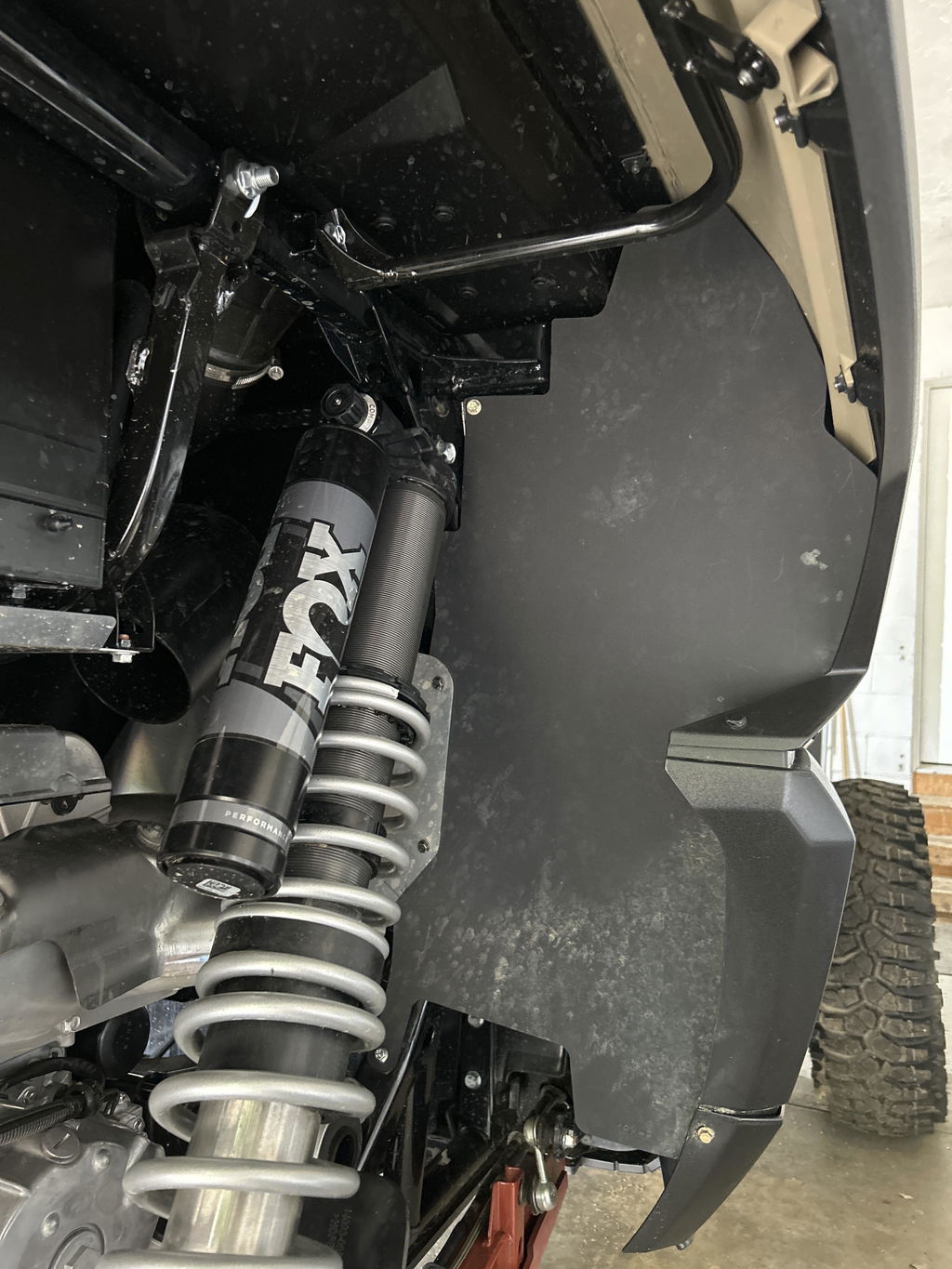
At higher desert and dune speeds, the front tires can throw sand, rocks, and other debris rearward with considerable force. Components behind the front wheels, including the trailing arms and rear suspension, can be exposed to repeated impacts from this roost. Over time, that repeated contact can contribute to surface wear and damage on unprotected components.
Fine sand, grit, and debris can contribute to wear on the front A-arms and the rubber CV boots that protect the CV joints. On machines ridden regularly in desert and dune conditions, repeated exposure to abrasive debris can wear on exposed surfaces over time. The A-arms can also take direct hits from rocks and debris thrown by the tires or encountered at speed. If a CV boot becomes torn or damaged, sand and other contaminants can enter the joint and accelerate internal wear if the problem is not caught and repaired.
Trail Armor's Super Tough Polymer is well suited for the sand, grit, and debris common in desert and dune environments. Because the material is not dependent on a painted or coated surface for corrosion protection, there is no finish to chip or wear through before rust can begin. Its low-friction surface also helps reduce drag as the skid moves across sand, rocks, and other trail obstacles. For riders who spend a lot of time in dry, abrasive conditions, Super Tough Polymer offers a durable, low-maintenance protection option.
UTV trail riding can seem less demanding than rock crawling, mud riding, or desert riding, but it still exposes a machine to a wide variety of hazards. Rocks, roots, sticks, ruts, washouts, and changing trail conditions can all create unexpected contact with the undercarriage and suspension. Even at moderate speeds, repeated exposure to these obstacles can lead to wear and damage over time.
Embedded rocks, exposed roots, washouts, fallen branches, and other trail debris can appear with little warning, even on familiar routes. Changing weather and trail conditions can also uncover or create new obstacles over time. These unexpected hazards can lead to sudden contact with the undercarriage, suspension, or lower body of the machine.
Even on relatively smooth trails, the tires can throw rocks, sticks, and other debris toward components behind the front wheels. Over time, repeated exposure to this trail roost can contribute to wear and damage on areas such as the A-arms, trailing arms, suspension components, and lower body of the machine.
Gravel and small rocks kicked up by the tires can repeatedly strike the underside of the machine during trail riding. With metal skid plates, those impacts can create noticeable noise and vibration that may be heard inside the cab. Repeated contact with rocks and debris can also contribute to wear on exposed underbody components over time.
Trail riding often means exposure to a mix of wet, dry, muddy, and dusty conditions throughout the season. Repeated moisture, mud, and debris can contribute to corrosion on exposed or damaged steel surfaces, especially where protective coatings have been scratched or worn away. Regular cleaning and inspection can help reduce buildup and catch problem areas early.
Trail Armor's Super Tough Polymer helps dampen the sound and vibration created when rocks, gravel, and trail debris strike the skid plates. Compared with metal skid plates, polymer can provide a quieter ride by reducing the ringing and resonance that can be transmitted into the cab. Because Super Tough Polymer will not rust, it also does not require painting, rust treatment, or other corrosion-related surface maintenance, making it a durable, low-maintenance choice for everyday trail riding.
To understand how Super Tough Polymer compares to aluminum and steel across all terrain conditions, read Trail Armor's Super Tough Polymer vs. Aluminum vs. Steel: What Your UTV Skid Plate Is Actually Made Of.
Here is a general Trail Armor protection guide based on common riding conditions and the types of hazards each terrain can present. Exact protection needs can vary by machine, riding style, and terrain.
Trail Armor's 1/2" Super Tough Polymer is used across many of our skid plate and protection products, providing zero impact memory, a low-friction surface, and rust-proof performance in a wide range of riding conditions. While product construction can vary by application, Super Tough Polymer is designed to deliver durable, low-maintenance protection across rock, mud, desert, and trail environments.
For the complete guide to choosing the right protection for your specific machine and riding style, read How to Choose the Right Skid Plate for Your UTV: A Practical Guide for Every Rider.

Different terrain creates different risks, and those risks are not always obvious before a ride. Rocky sections can expose the undercarriage to direct impacts. Mud and moisture can contribute to buildup and corrosion over time. Desert and dune conditions can increase exposure to sand, grit, and repeated debris. The right protection helps prepare your machine for the conditions you ride most often.
Trail Armor offers a wide range of UTV protection products designed to help protect machines across different riding environments. Whether you spend your weekends crawling technical rock sections, riding muddy trails, exploring desert and dune terrain, or cruising wooded trails, Trail Armor has protection options built to help address the hazards your machine is most likely to encounter.
Explore the full Trail Armor catalog by vehicle make and model and find the protection your machine was built to have. For the complete guide to Trail Armor's A-arm and trailing arm protection, read Why Your UTV's A-Arms and Trailing Arms Need Protection: The Complete Guide to Trail Armor iMpact Guards.
Yes. While full skid plates are a strong foundation for many types of riding, additional protection priorities can vary depending on the terrain, machine, and riding style. Rock crawlers may benefit most from A-arm guards and trailing arm guards for added protection against direct impacts. Mud riders may want to prioritize mud shields, fender extensions, and inner fender protection to help reduce debris buildup. Desert and dune riders can benefit from A-arm and trailing arm protection against rocks, sand, grit, and high-speed debris. Trail riders may choose a combination of skid plates, A-arm guards, trailing arm guards, and fender extensions based on the conditions they encounter most often.
Full skid plate protection can be a valuable upgrade even for casual trail riding. Rocks, roots, sticks, and other debris can still come into contact with the undercarriage, even on less technical trails. A full skid plate system helps provide broader protection for critical components underneath the machine and can give riders added confidence when trail conditions change unexpectedly.
Full skid plates with Integrated Slider Nerfs are a strong foundation for UTV rock crawling because they help protect the undercarriage and create a smoother transition between the center skid and rocker area, reducing exposed edges and potential catch points. iMpact Front A-Arm Guards add protection for the front A-arms and nearby CV boots, while iMpact Trailing Arm Guards help protect the rear trailing arms from direct contact with rocks, ledges, and other hard obstacles. Together, these products provide a more complete protection package for the areas most exposed during technical rock crawling.
Yes. Trail Armor’s Super Tough Polymer will not rust and is well suited for repeated exposure to mud, water, and wet riding conditions. Trail Armor skid plate systems incorporate strategically placed drain holes to help water, mud, and debris drain from beneath the machine and make cleanup easier. Regular cleaning and inspection are still recommended after riding in heavy mud or wet conditions.
Desert and dune riders often deal with repeated exposure to sand, grit, and high-speed debris, while rock crawling places more emphasis on direct contact with rocks and ledges. Both riding styles can benefit from full skid plates, iMpact Front A-Arm Guards, and iMpact Trailing Arm Guards, but the reasons for that protection can differ. In desert and dune conditions, A-arm guards help protect exposed suspension components from rocks, sand, and repeated abrasion, while trailing arm guards help shield the rear suspension from high-speed roost and direct impacts. Trail Armor’s Super Tough Polymer is also well suited for these abrasive conditions because it will not rust and does not rely on a painted or coated surface for corrosion protection.
Trail Armor products are designed for vehicle-specific fitment and to maintain proper clearance through normal suspension travel when installed as intended. Because machine setups can vary, especially with aftermarket suspension components, lifts, portals, or other modifications, riders should always verify fitment and clearance on modified vehicles. Trail Armor protection is engineered to add durable coverage while maintaining the normal operation of the components it is designed around.
Full Skid Plates with Integrated Slider Nerfs are a strong protection option across a wide range of terrain types, including rock, mud, desert, and wooded trails. iMpact Front A-Arm Guards and iMpact Trailing Arm Guards can also provide valuable protection wherever suspension components are exposed to rocks, debris, abrasion, or direct contact with obstacles. Many Trail Armor protection products use our Super Tough Polymer, which offers zero impact memory, a low-friction surface, and rust-proof performance in a wide range of riding conditions.
{"one"=>"Select 2 or 3 items to compare", "other"=>"{{ count }} of 3 items selected"}